Get Healthy!
- Posted April 21, 2026
Service Dogs Perform Tasks Akin To Human Caregivers, Researchers Say
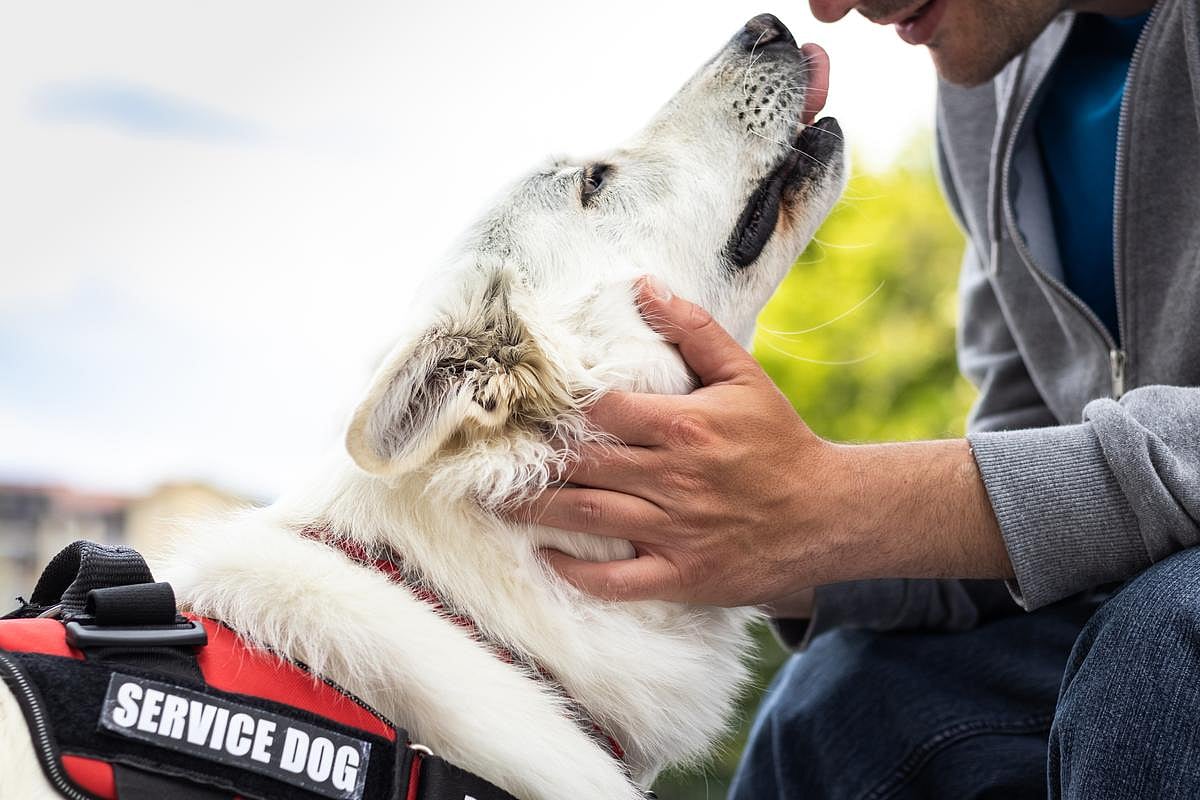
Assistance dogs are more active caretakers for their impaired or ill humans than we give them credit for, a new study says.
These service dogs not only help people with practical tasks, but actively contribute to their care, researchers recently reported in the journal Human Relations.
In this way, assistance dogs start to take on roles typical of human caregivers, researchers found.
One person in the study mentioned a favorite pair of wool socks they like to wear at home.
“When I came home yesterday, I wandered around the house wondering where I had put my socks again. Then I sat on the sofa, and he [the dog] came to sit next to me,” the participant recalled.
“He dropped the socks in my hand and said, ‘Here they are; this is what you were looking for just now,’ ” the person recounted. “Even though I didn’t even mention the wool socks, he still thought, ‘Hey, here are your socks; you’ll be looking for these soon.’ ”
These sorts of interactions blur the lines between typical human/canine relationships, said senior researcher Suvi Satama, an assistant professor of management and organization at the University of Turku in Finland.
“Assistance dogs care for humans, and humans also do their best to care for their assistance dogs,” Satama said in a news release. “In this way, vulnerability becomes relational, and both parties give and receive care.”
For the new study, researchers analyzed the everyday lives of 13 service dogs and their human companions.
In some situations, humans must rely on their dogs’ judgment more than their own, researchers found.
“For example, a person with diabetes must rely on the dog when the dog detects changes in blood sugar. When the person responds to the dog’s signal and checks their blood sugar or follows the dog’s alert to take the necessary medication in time, serious situations can be avoided,” Satama said.
Sometimes these dogs can even get up to a bit of mischief, when they know they are off duty, researchers found.
“For example, I was observing a meeting of people with visual impairments, at which their assistance dogs were also present,” Satama said.
“The dogs had been told to stay on the floor next to their people,” she said. “Suddenly, one of the assistance dogs started crawling towards another dog and some scents, and the person did not notice this due to their visual impairment. I thought that the dog was carrying out their own agency.”
These results indicate that understanding dogs’ ability to go beyond simple instructions might help them be better caregivers, researchers said.
“We extend the debate by highlighting active, dog-led care work that shows how dogs make informed interpretations during care work and act on them,” the research team concluded. “Meanwhile, interspecies care underscores our ethical responsibility to seriously consider care work from the animals’ perspectives by asking, ‘What’s in it for them and how can mutual advantage be achieved?’ ”
More information
The American Kennel Club has more on service dogs.
SOURCE: University of Turku, news release, April 14, 2026
